


The easiest shirt and pant combinations use one neutral piece and one complementary or contrasting color. White, light blue, black, grey, navy, beige, and olive are dependable starting points because they work across formal, business-casual, and everyday outfits.
Last updated: August 25, 2026
Shirt and Pant Color Combination Chart
Use this chart as a quick starting point. The best final choice also depends on the occasion, fabric, fit, footwear, and how light or dark each color appears.
| Shirt color | Best pant colors | Works well for |
|---|---|---|
| White | Navy, charcoal, black, khaki, olive | Formal, work, casual |
| Light blue | Navy, charcoal, beige, khaki | Work, interviews, smart casual |
| Black | Grey, beige, olive, black | Evening, casual, monochrome |
| Grey | Black, navy, burgundy, white | Work, casual, layered outfits |
| Navy | Grey, khaki, beige, white | Business casual, travel, weekends |
| Pink | Navy, grey, beige, white | Work, spring and summer outfits |
| Olive | Black, beige, navy, cream | Casual, outdoors, fall outfits |
| Burgundy | Charcoal, black, navy, beige | Evening, fall and winter outfits |
| Beige or cream | Navy, brown, olive, black | Smart casual, warm-weather outfits |
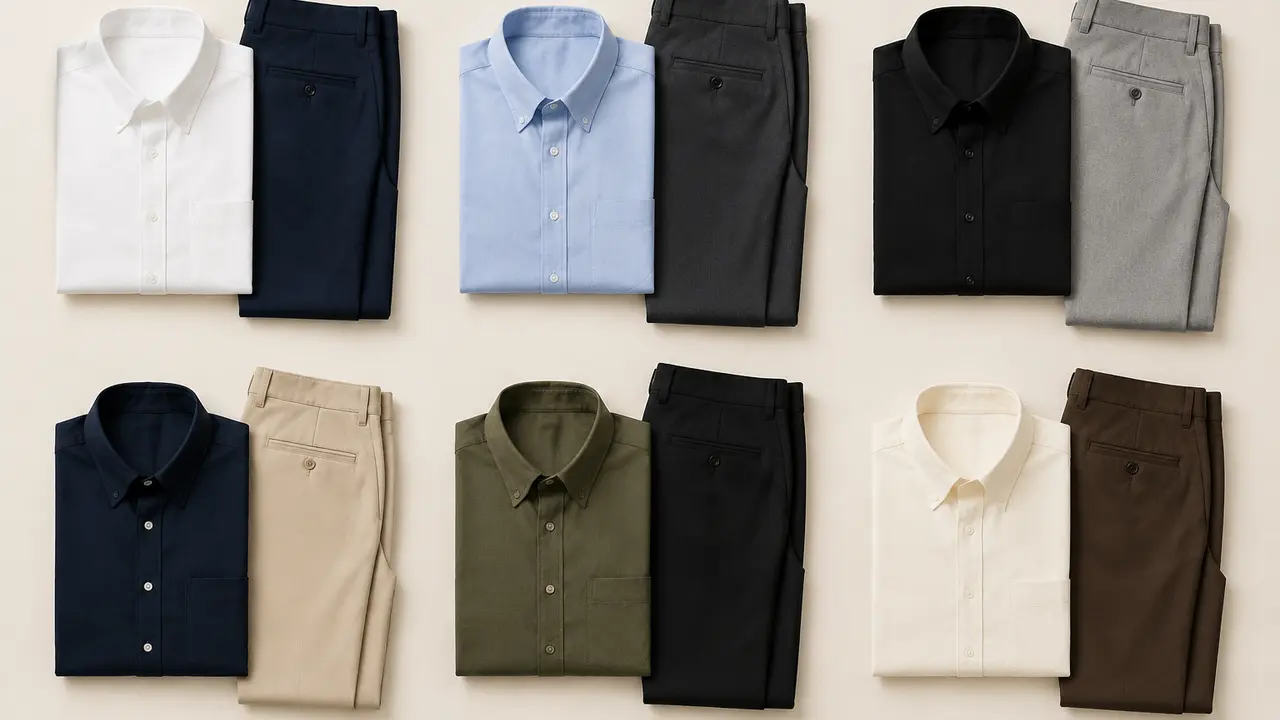
Best Shirt and Pant Combinations
White Shirt with Navy Pants
This clean, high-contrast pairing works for offices, dinners, interviews, and semi-formal events. A crisp button-down makes it more formal, while a white polo or T-shirt makes it casual. Brown shoes warm up the outfit; black shoes make it sharper.
Light Blue Shirt with Charcoal Pants
Light blue softens dark grey and creates a professional combination without the stark contrast of black and white. It works especially well with tailored trousers, chinos, or a structured blouse. Add dark brown, oxblood, or black footwear according to the formality of the occasion.
Black Shirt with Grey Pants
A black top with medium or light grey pants creates clear contrast and is easy to style for evening events. Keep the fabrics clean and the fit intentional. If both pieces are very dark, use a lighter shoe, metallic accessory, or visible texture so the outfit does not look flat.
White Shirt with Khaki Pants
This is a reliable warm-weather and business-casual option. Cotton, linen, and lightweight chino fabrics keep the pairing relaxed. Brown loafers, white sneakers, or simple sandals can shift it from office-ready to casual.
Navy Shirt with Beige Pants
Navy provides depth while beige keeps the outfit light. The combination works with chinos, wide-leg trousers, or casual linen pants. Choose a pale beige for stronger contrast or a deeper tan for a softer, tonal result.
Olive Shirt with Black Pants
Olive and black create a grounded casual outfit. Use a fitted shirt with tailored pants for a cleaner appearance, or pair an overshirt with black jeans for a relaxed look. White or black shoes both work, depending on how much contrast you want.
How to Match Shirt and Pant Colors
1. Start with One Neutral Color
Build the outfit around white, black, grey, navy, beige, khaki, or denim. A neutral base makes it easier to add a stronger color without creating competition between the shirt and pants.
2. Create Enough Contrast
Light shirts usually look clear with darker pants, while dark shirts stand out against lighter pants. Similar shades can also work, but they need a visible difference in tone or texture. For example, a pale blue shirt is easier to distinguish from dark navy trousers than from medium blue pants.
3. Repeat, Do Not Compete with Patterns
When the shirt has checks, stripes, or a print, choose solid pants in a color already present in the pattern. If the pants are patterned, use a plain shirt. This keeps one piece as the focal point and prevents the outfit from appearing busy.
4. Check the Undertone
Colors may lean warm or cool. Warm beige, rust, cream, and olive often coordinate naturally, while cool grey, blue, black, and crisp white tend to work together. Mixing warm and cool pieces is possible; just repeat the temperature in shoes or accessories to make the choice feel intentional.
5. Consider the Occasion
Formal settings usually benefit from restrained colors, structured fabrics, and stronger contrast. Casual outfits allow softer fabrics, brighter colors, denim, and relaxed fits. When unsure, choose a neutral shirt, dark tailored pants, and simple footwear.
Formal and Business Shirt–Pant Pairings
| Occasion | Recommended combination | Finishing choice |
|---|---|---|
| Job interview | White or light blue shirt + navy or charcoal trousers | Dark leather shoes and a matching belt |
| Formal office | White shirt + charcoal, navy, or black trousers | Structured blazer or minimal accessories |
| Business casual | Oxford shirt + khaki, grey, or navy chinos | Loafers, flats, or clean leather sneakers |
| Wedding guest | Pastel or muted shirt + navy, beige, or charcoal trousers | Choose fabric weight for the season |
| Evening event | Black or burgundy shirt + grey or black trousers | Add texture or a subtle metallic accent |
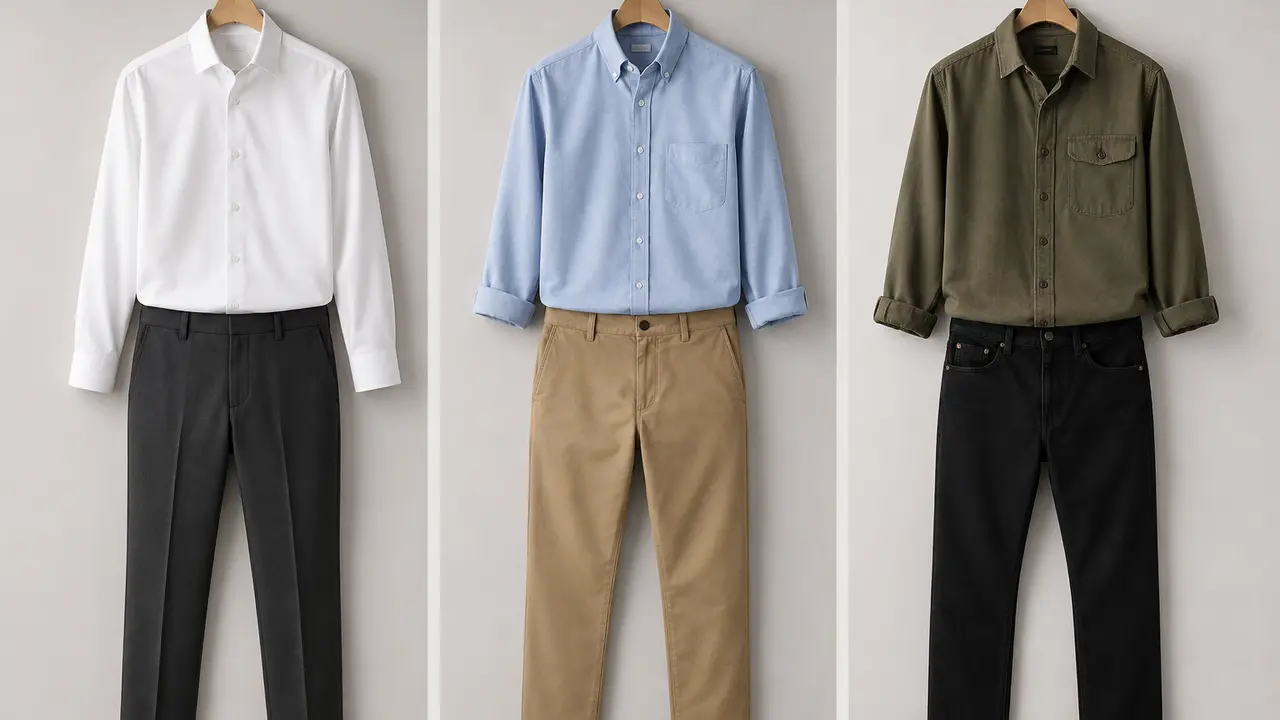
Fit matters as much as color. Shoulder seams, sleeve length, waist comfort, trouser rise, and hem length should look deliberate. Use our shirt size chart and measurement guide when checking the top, and compare the trousers with the main pant size chart.
Casual Shirt and Pant Combinations
- White T-shirt + blue jeans: A simple base that works with almost any casual shoe.
- Denim shirt + black jeans: Choose a noticeably lighter or darker denim wash to avoid an accidental near-match.
- Striped shirt + solid chinos: Pull one neutral color from the stripe for the pants.
- Olive overshirt + beige pants: A practical combination with warm, natural tones.
- Black polo + grey chinos: Clean enough for a casual dinner while remaining comfortable.
- Neutral blouse + colored trousers: Let burgundy, cobalt, forest green, or rust pants become the focal point.
Matching Fabrics and Textures
Color alone cannot make two pieces feel connected. Fabric weight and texture should also suit the same level of formality.
| Shirt fabric | Suitable pant fabrics | Best use |
|---|---|---|
| Poplin or Oxford cotton | Wool trousers, chinos, denim | Office to casual |
| Linen | Linen blend, cotton, lightweight chinos | Warm weather |
| Denim or chambray | Chinos, twill, contrasting denim | Casual |
| Silk or satin | Tailored wool, crepe, smooth blends | Office or evening |
| Flannel | Denim, corduroy, heavier chinos | Cool weather |
As a general rule, pair lightweight shirts with similarly light trousers and heavier shirts with more substantial pants. A sharp difference can work, but it should look deliberate rather than seasonal or formal mismatching.
Common Shirt and Pant Matching Mistakes
- Using bold patterns on both pieces without a shared color or clear focal point.
- Choosing colors that are almost identical but visibly miss each other.
- Ignoring fit because the colors look good.
- Combining a highly formal shirt with distressed or overly casual pants for a formal event.
- Letting shoes and belts introduce an unrelated color.
- Assuming every black, navy, beige, or white has the same undertone.
If sizing is inconsistent across labels, use the cross-brand size comparison instead of relying only on S, M, L, or waist-number labels.
Frequently Asked Questions
What shirt color goes with every pant color?
White is the most versatile choice, followed by light blue, black, grey, and cream. The best option depends on how formal the outfit is and whether the pants are light, dark, warm, cool, plain, or patterned.
What shirt goes with black pants?
White, light blue, grey, olive, burgundy, beige, pink, and patterned shirts can all work with black pants. Use a lighter shirt for obvious contrast or another dark shade for a more understated evening look.
What shirt goes with khaki pants?
White, navy, light blue, olive, burgundy, black, and soft pink pair well with khaki. Brown or white footwear usually supports the warm tone of the pants.
Can a shirt and pants be the same color?
Yes. A monochrome outfit looks strongest when the shades or textures are visibly different. For example, combine a light grey shirt with charcoal trousers, or a soft cream blouse with deeper beige pants.
Should a belt match the shirt, pants, or shoes?
For traditional formal styling, coordinate the belt most closely with the shoes. Casual outfits allow more flexibility, but the belt should still relate to another visible color or material.
Build a Reliable Combination
Start with one neutral piece, create clear contrast, limit the outfit to one dominant pattern, and match the level of formality across the shirt, pants, and footwear. After choosing the colors, check the fit and fabric weight. A simple, well-fitting white-and-navy combination will usually look more polished than a complicated outfit with mismatched proportions.