


Shirt sizes such as S, M, L, XL, and XXL are based mainly on chest or bust measurements, but the exact ranges vary by brand, gender category, country, and fit. Measure around the fullest part of your chest, keep the tape level, and compare the result with the specific brand’s chart. Use the tables below as a general reference—not as a replacement for a product-specific size guide.
Last updated: August 24, 2026
Quick Shirt Size Chart: S, M, L, XL, and XXL
The ranges below show common body chest measurements. They are not the width of a shirt laid flat. Brand charts may shift a size by an inch or more, so check the seller’s measurements before ordering.
Men’s and Unisex Shirt Size Chart
| Shirt size | Chest (inches) | Chest (cm) |
|---|---|---|
| Small (S) | 34–36 | 86–91 |
| Medium (M) | 38–40 | 97–102 |
| Large (L) | 42–44 | 107–112 |
| Extra Large (XL) | 46–48 | 117–122 |
| 2XL | 50–52 | 127–132 |
| 3XL | 54–56 | 137–142 |
| 4XL | 58–60 | 147–152 |
Women’s Shirt Size Chart
| Shirt size | Bust (inches) | Bust (cm) |
|---|---|---|
| XXS | 27.5–29.5 | 70–75 |
| Extra Small (XS) | 29.5–32.5 | 75–83 |
| Small (S) | 32.5–35.5 | 83–90 |
| Medium (M) | 35.5–38 | 90–97 |
| Large (L) | 38–41 | 97–104 |
| Extra Large (XL) | 41–44.5 | 104–113 |
| 2XL | 44.5–48.5 | 113–123 |
Important: A women’s medium, a men’s medium, and a unisex medium do not necessarily have the same shape or measurements. For brand-specific examples, compare our cross-brand size comparison and individual brand charts.
What Do S, M, L, XL, and XXL Mean?
Alpha sizes group a range of body measurements under a letter:
- S means Small.
- M means Medium.
- L means Large.
- XL means Extra Large.
- XXL or 2XL means Double Extra Large.
- 3XL, 4XL, and beyond extend the same sizing sequence.
These labels are convenient, but they are not universal standards. A medium from one company may fit like a small or large from another. Cut, fabric, intended customer, and regional sizing all affect the finished garment.
Body Measurement vs. Shirt Measurement
This distinction prevents one of the most common online sizing mistakes:
- Body measurement is the circumference of your chest, bust, waist, or other body area.
- Garment measurement is the measurement of the finished shirt itself.
- Flat chest width is measured from armpit to armpit while the shirt lies flat. Doubling it gives the approximate shirt circumference.
A shirt must normally be wider than your body to allow movement. This extra room is called ease. Slim-fit shirts use less ease, while regular and relaxed fits use more. If a seller provides garment measurements, compare them with a shirt you already own and like rather than comparing them directly with your bare chest measurement.
How to Measure for the Right Shirt Size
Use a soft measuring tape and wear a thin shirt or fitted underlayer. Stand naturally without expanding your chest or pulling in your stomac
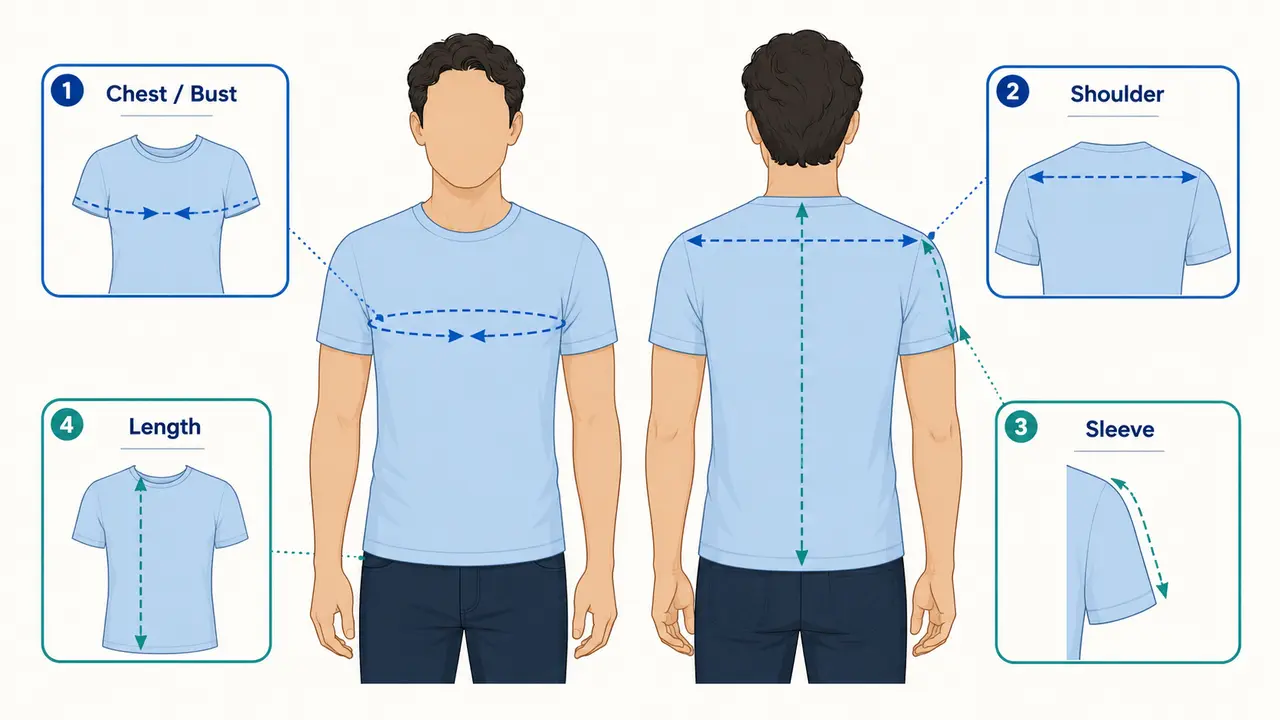
h.
1. Measure Your Chest or Bust
Wrap the tape around the fullest part of your chest or bust, under the arms, and across the shoulder blades. Keep it horizontal and comfortably close to the body without compressing the skin. This is the most important measurement for most T-shirts and casual tops.
2. Measure Your Natural Waist
Measure around the narrowest part of your torso, usually above the belly button. Use this measurement when the shirt is fitted through the waist or when the brand chart lists both chest and waist.
3. Measure Shoulder Width
Measure across the back from one shoulder point to the other. A correct shoulder fit helps the sleeve seam sit near the edge of your shoulder instead of pulling inward or dropping too far down the arm.
4. Measure Sleeve Length
For long sleeves, start at the shoulder point and follow the outside of the arm to the wrist. Keep the elbow slightly bent. Dress-shirt brands may instead measure from the center back of the neck, across the shoulder, and down to the wrist, so follow the method shown on the brand’s chart.
5. Measure Shirt Length
Measure from the highest shoulder point near the collar down to the desired hem. Compare this with a well-fitting shirt, especially if you are tall, petite, or plan to tuck the shirt in.
For a more detailed walkthrough, see how to measure your shirt size accurately.
How Should a Shirt Fit?
The correct label is less important than the way the shirt fits your body. Check these areas after trying it on:
- Shoulders: The seams should sit close to the ends of your shoulders.
- Chest: The fabric should not pull, gape, or create horizontal stress lines.
- Waist: You should be able to move and sit without tightness.
- Sleeves: Arm movement should feel natural, and the cuffs should reach the intended position.
- Length: The hem should provide the coverage needed for wearing the shirt tucked or untucked.
- Buttons: A button-up shirt should close without gaps between buttons.
If the shoulders fit but the waist is loose, tailoring may work better than choosing a smaller size. If the shoulders and chest are tight, size up. Review these common shirt sizing mistakes before buying.
Why the Same Shirt Size Fits Differently Across Brands
Brand Sizing
Brands create their own fit models and target customers. This is why your usual size is only a starting point. Always prioritize the measurements on the current product page.
Slim, Regular, and Relaxed Cuts
A slim fit follows the torso closely, a regular fit allows moderate room, and a relaxed or oversized fit uses more fabric through the ches
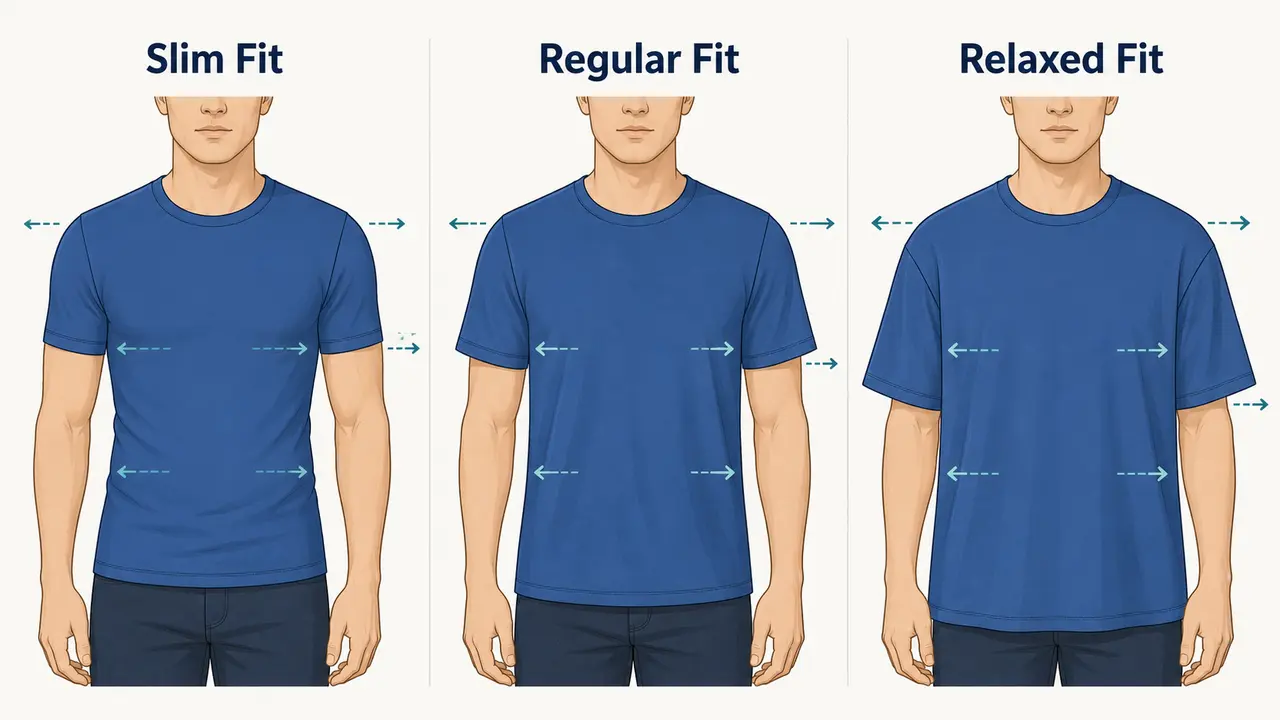
t, waist, and sleeves. Two shirts with the same size label can therefore feel completely different.
Fabric and Shrinkage
Stretch blends can feel more forgiving than rigid woven fabrics. Untreated cotton may shrink with heat, while pre-shrunk cotton and many synthetic blends are more stable. Follow the care label rather than automatically sizing up.
Men’s, Women’s, and Unisex Shapes
Men’s shirts are often straighter through the torso and broader at the shoulders. Women’s shirts may include more shaping through the bust and waist. Unisex shirts commonly use a straighter cut based on men’s sizing, so some shoppers choose one size smaller than their usual women’s size—but the product chart remains the safest guide.
What to Do If You Are Between Shirt Sizes
- Choose the smaller size for a closer fit when the fabric stretches and your measurements remain within the chart.
- Choose the larger size for more movement, layering, rigid fabric, or possible shrinkage.
- Prioritize the chest and shoulders for structured shirts because these areas are harder to alter.
- Compare garment measurements with a shirt you already own.
- Check customer fit notes and the return policy before ordering.
If you are buying across countries, use the international shirt size conversion chart. For a dedicated reference by garment type, visit the main shirt size chart.
Frequently Asked Questions
What chest size is a men’s medium shirt?
A men’s medium commonly fits a 38–40 inch (97–102 cm) chest, but the brand’s chart should make the final decision.
What bust size is a women’s medium shirt?
A women’s medium often covers roughly a 35.5–38 inch (90–97 cm) bust. Cut and brand can change this range.
Are XXL and 2XL the same size?
Many brands use XXL and 2XL interchangeably, but some separate their straight-size XXL range from a plus-size 2X range with different proportions. Check the chart rather than relying on the label.
Should I size up in a unisex shirt?
Not automatically. Unisex shirts often use a straighter, men’s-based cut. Compare your chest measurement and preferred fit with the product chart; some shoppers who usually wear women’s sizes choose one size smaller.
How do I measure a shirt that already fits?
Lay it flat without stretching it. Measure armpit to armpit for chest width, shoulder seam to shoulder seam, shoulder to cuff for sleeve length, and the highest shoulder point to the hem for body length.
Is shirt size based on chest or waist?
Casual shirts are usually selected primarily by chest or bust measurement. Fitted shirts may also use waist, shoulder, sleeve, and length measurements. Dress shirts can additionally use neck and sleeve numbers.
Choose Your Shirt Size with Confidence
Start with your chest or bust measurement, confirm whether the chart uses body or garment dimensions, and then account for the shirt’s cut and fabric. Treat S, M, L, and XL as convenient labels rather than fixed standards. A product-specific chart and a comparison with a shirt you already own provide the most reliable fit.
Reference note: Measurement practices and example ranges were checked against current size guidance from major retailers, including Nike, ASOS, Hanes, and L.L.Bean. Individual products may use different specifications.