


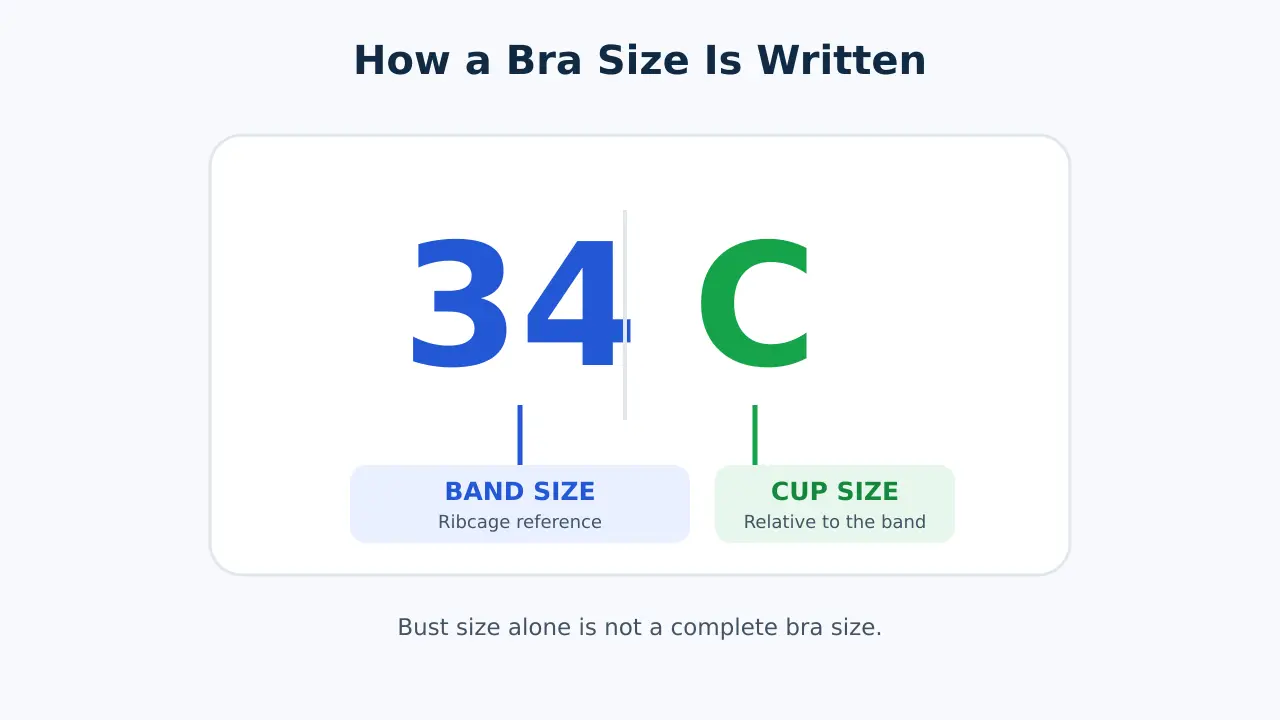
Bust size is one body measurement, while bra size combines a band number and a cup letter. Your bust measurement is taken around the fullest part of your bust. A bra size such as 34C also accounts for the measurement around your ribcage under the bust and the sizing method used by the brand.
Last updated: August 25, 2026
Bra Size vs Bust Size at a Glance
| Feature | Bra size | Bust size |
|---|---|---|
| What it represents | Band size plus cup size | Circumference at the fullest part of the bust |
| Format | Number and letter, such as 34C | One measurement, such as 37 inches |
| Measurements needed | Underbust and full bust | Full bust only |
| Main purpose | Starting size for choosing a bra | Body measurement used for bras and clothing |
| Universal across brands? | No; methods, cup sequences, and fits vary | The measurement is consistent, but instructions may vary slightly |
What Is Bust Size?
Bust size is the circumference around the fullest part of the bust. It is recorded as a single number in inches or centimeters. For example, if the tape reads 37 inches around the fullest point, the bust measurement is 37 inches.
Bust size does not tell you the band or cup by itself. Two people can have the same full-bust measurement and need different bra sizes because their underbust measurements and proportions are different.
What Is Bra Size?
A bra size has two connected parts:
- Band size: the number, such as 32, 34, or 36, associated with the ribcage measurement under the bust.
- Cup size: the letter, such as B, C, D, DD, or E, associated with the difference between the full-bust measurement and the band reference used by that sizing system.
The cup letter is relative to the band. A C cup on a 32 band does not have the same volume as a C cup on a 38 band. This is why a bust measurement alone cannot reliably produce a complete bra size.
How to Measure Bust and Underbust
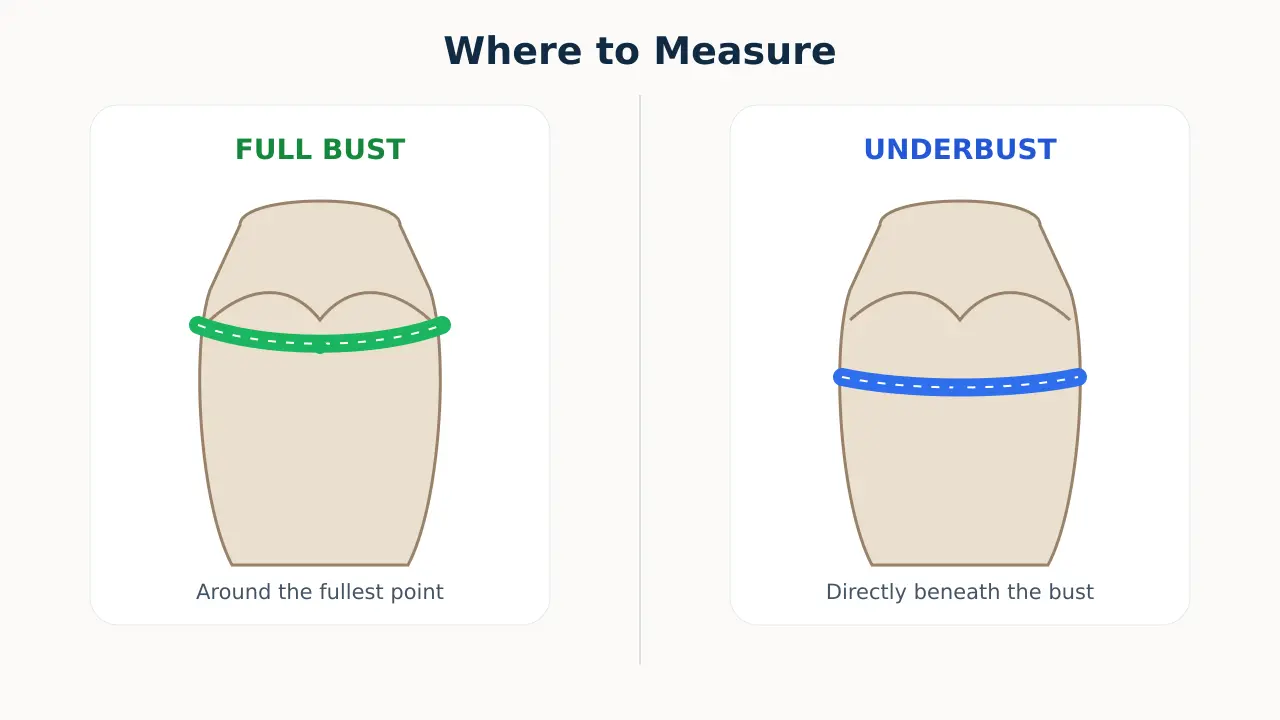
Use a flexible measuring tape. Stand naturally with your shoulders relaxed and keep the tape parallel to the floor. A non-padded bra can help support the bust without adding volume, although the specific brand may provide different instructions.
1. Measure the Underbust
Wrap the tape directly beneath the bust where the bra band normally sits. Keep it level across the back and snug enough to follow the body without causing discomfort. Record the raw measurement instead of immediately adding inches or forcing it to an even number.
2. Measure the Full Bust
Place the tape around the fullest part of the bust. Keep it level and close to the body without compressing the tissue. Breathe normally and record the measurement to the nearest practical increment required by the retailer.
3. Use the Brand’s Sizing Method
Enter both measurements into the manufacturer’s chart or calculator. Some systems map the underbust closely to the band number, while others use an adjusted method. Cup-letter progressions also differ between US, UK, EU, and other systems. The retailer’s instructions should therefore make the final decision.
Can You Calculate Bra Size from Bust Size?
No—not from bust size alone. You need the underbust measurement as well. A common starting method compares the full bust with the band reference:
Full bust − band reference = approximate cup difference
In many US charts, each additional inch begins a new cup letter. This is only a starting reference, not a universal conversion.
| Approximate difference | Common US starting cup |
|---|---|
| Less than 1 inch | AA |
| 1 inch | A |
| 2 inches | B |
| 3 inches | C |
| 4 inches | D |
| 5 inches | DD or E, depending on the brand |
| 6 inches | DDD or F, depending on the brand |
Example: Suppose the underbust measures 33 inches and the full bust measures 37 inches. If a brand maps the underbust to a 34 band, the 3-inch difference between 34 and 37 may suggest a 34C in that brand’s US chart. A different calculator or sizing system may recommend another starting size, so compare the result with the product chart and fit.
Why the Same Measurements Can Produce Different Bra Sizes
Brands Use Different Band Methods
One retailer may use the raw underbust measurement, another may round it, and another may apply an adjustment. Two calculators can therefore return different band numbers from the same measurement.
Cup Sequences Vary by Country
US, UK, EU, and Australian systems do not always progress through cup letters in the same way. For example, letters after D may be labeled DD, DDD, E, F, FF, or another sequence depending on the system.
Style and Construction Affect Fit
A molded T-shirt bra, plunge bra, balconette, and unlined full-cup bra can fit differently in the same labeled size. Wire width, cup depth, fabric stretch, and breast shape all affect the result.
How to Check Whether a Bra Fits
- Band: It should sit level around the body and feel secure without restricting comfortable breathing.
- Cups: Breast tissue should be contained without spilling, cutting in, or leaving obvious empty space.
- Center: On many underwired styles, the center panel should sit close to the chest. Body shape and bra design can affect this.
- Underwire: It should surround the breast tissue rather than resting on it.
- Straps: They should stay in place without digging in. Most support should come from the band, not overtightened straps.
If one section fits and another does not, try a different cup, band, or bra shape rather than assuming the measurement was wrong.
Bra Sister Sizes Explained
Sister sizes are nearby sizes designed to keep approximately similar cup volume while changing the band. When moving up one band size, move down one cup letter; when moving down one band size, move up one cup letter.
For example, the common sister-size family around 34C includes 32D and 36B. The cups may have similar volume, but the band tension, support, wire position, and overall feel will not be identical. Use sister sizing as a fitting adjustment, not as proof that every size in the family will fit the same.
For a more detailed comparison of these terms, see cup size vs bra size.
Bust Size Is Not Clothing Size
Bust measurement is also used in shirts, dresses, jackets, and other clothing, but clothing sizes combine several body measurements and vary by brand. Someone with a 37-inch bust might wear different dress or top sizes depending on the waist, shoulders, cut, and ease of the garment.
Use the bra size chart for bra labels and a product-specific clothing chart when choosing tops or dresses. If brand labels are inconsistent, consult the cross-brand size comparison.
International Bra Size Conversions
International conversions are not as simple as changing the band number. Band units and cup-letter sequences may both change. A US and UK size can share the same band number but diverge after certain cup letters, while EU bands commonly use centimeter-based labels.
Use an international conversion chart only as a starting point. Confirm the exact system listed on the product page and check the retailer’s own chart before ordering.
Frequently Asked Questions
Is bust size the same as cup size?
No. Bust size is the full circumference around the bust. Cup size is a letter determined from the relationship between the full bust and the band reference used by a particular sizing system.
Can a 38-inch bust tell me my bra size?
No. A 38-inch bust could correspond to different bra sizes depending on the underbust measurement, brand method, and cup system.
Should I add four inches to my underbust?
Do not apply the “plus four” rule automatically. Some brands use an adjusted method, while others map the underbust more directly. Follow the chart or calculator for the bra you plan to buy.
Why do two brands recommend different sizes?
Brands can use different band calculations, cup sequences, patterns, wire shapes, and fabric stretch. Treat the calculated size as a starting point and assess the actual fit.
Are 34C and 36B the same?
They are commonly treated as sister sizes with approximately similar cup volume, but they do not fit identically. The 36B has a longer band and different proportions.
When should I measure again?
Measure again when the current bras no longer fit as expected, after a notable body change, or before buying from a brand that uses a different sizing method.
Use Both Measurements for a Better Starting Size
Bust size is a single circumference; bra size combines a band and cup. Measure the underbust and full bust carefully, keep the raw numbers, and then use the specific brand’s sizing method. Finally, check the band, cups, center, wires, and straps because measurements identify a starting size—not a guaranteed fit in every bra.